IN THEIR OWN WORDS
Whole Communities, Whole People
K. was born and raised in Hawai’i. K. has worked where people, culture and nature intersect for most of their career and has practiced law, among many other things. K. is also a musician who uses music as a tool to raise awareness of the contemporary economic, social, cultural and environmental justice issues of Hawaiʻi.
CDE: For their story, K. decided not to choose a single term from the suggested list: “Transformation,” “Decolonizing,” “Liberatory Theory,” or “White Supremacy Culture.” They said they were tired of all of them and preferred not to tell a story centered around any one in particular.
So we asked instead, why?
K.: The word I was thinking of, ironically, is “whole.” What makes a whole person or a whole community for that matter?
Concerning the terminology we’re talking about — I spent a lot of my younger years very involved on issues where these terms were common. But I feel they had more succinct meanings. They weren’t so diluted and emotionally charged. Today I almost feel they’re being used to divide us.
So now I want to talk about what it means to be a whole community or person. I find myself in rooms — maybe because I’m older now — where younger generations use these terms to talk down to their elders, not knowing they’re in a room able to talk as they do because of the struggles of the people they’re denigrating.
So how do we use these terms to build a whole community? Equity, transformation — what kinds of systems or institutions do we want to change? I work on all those things, but I wonder if we’re actually building toward connecting ourselves more. Are we talking about an authentic vulnerability or are we fetishizing victimhood?
I find myself running across folks — I understand what we mean when we say “self care” — but sometimes people use that, and I feel like they only care for themselves. Their actions reflect only themselves. Sometimes they use the phrase to forward their own feelings and personal agendas. When we go down that path I wonder, are we building toward a whole community? Are we trying to connect to each other? Are we stretching beyond ourselves through self-care? Are we saying we are over-stretched? I can’t always tell these days. I think being a whole community is a culture that is greater than itself; one that is beyond a narrow focus of self-care. Leaders need to be cared for, yes, but focusing on the care of yourself as a leader is a very minimized, narrow — if not self-defeating — approach to leadership. It is pretty much the opposite.
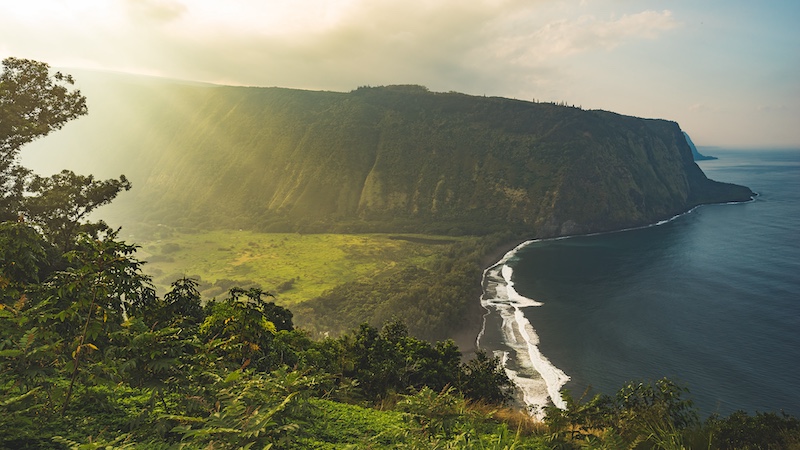
I’m of mixed heritage, and I grew up in Hawaiʻi. Hawaiʻi has a deep history of its own institutional racism and ethnocentric biases in the way we conduct ourselves as an island society. When I was born my parents were on the edge of an era of miscegenation laws. They didn’t talk about it; it was not a big deal to them. My community was also different. It was a little more open to who I was. But when I look back I realize it was a big deal outside my family. But internally I believe I was raised to be a whole person regardless of how others might try to carve me up.
The work I am privileged to do is about building something greater together. Whole people are not whole without community, without other people and a healthy environment. The rhetoric of today feels like it is more about division, revenge and grievance. That’s how I usually feel when we have charged discussions. Sometimes I feel we’ve overshot the runway. Our systems of governance and institutions are fragmenting as well. It’s like the Tocqueville effect — the idea that as things get better, the impetus to change becomes more severe. So does its resistance. The safer you are, the more extreme or charged you are in your language and the way you address other people. As things get better, the smaller things become bigger. We’ll use terms like “violence” when we’re talking about hurt feelings. The Tocqueville effect is a disproportionate response. We are the most charged now at a time when we are quite possibly the most materially spoiled society in human history.
We’re privileged to speak the way we do and use the terminology we can. It’s weird to sit in rooms and see people I looked up to, who are imperfect people who have done their best, being dragged through the mud by younger people. As if speaking in a loud or mean tone and self-righteous language is a way to make change — when the “safe space” that enables their choice of tone and language exists because of the people they’re directing it at. This is not to discount the many young leaders I do see coming up who see this and work to build on what was left to them to carry forward.
At the local level I do see change, and I do see things getting better at the local level. We’re trying to transform things — talking to each other, one on one in those places where we have more agency. That’s what my work is. While I am focused on the power of small local efforts I am astounded that there are some 385,000 people born a day. One hundred sixty people born each month in Hawai’i — five or six classrooms of people every month. What are the systems we’ve got to create to address that? We need to be able to address the trees and the forest. But my work is less about spending time up in the canopy. My work is in the understory.
How do we build and transform things to make a more whole community? I read this book almost two decades ago called “The End of Power,” by a guy named Moisés Naím. He talks about institutions becoming senescent and in some cases losing the public trust and their integrity. This was going to lead to power being dispersed and fragmented. That we were going to start having trust issues and problems figuring out what governance and government is.
Having an understanding of governance and government is important to me, even at the international level. In 2016, Hawaiʻi hosted the International Union for the Conservation of Nature’s World Conservation Conference (IUCN-WCC). This is where I really felt I saw Moisés’s prophetic thoughts begin to take shape in reality. It was not the U.S. that hosted the WCC, it was Hawaiʻi. Ordinarily these conferences are hosted by a nation state. But in this case the state of Hawai’i hosted a world conference. This was unprecedented — we were the first sub-national entity to host a global convention like it. And in Marseille, France, in 2021, my organization among a group of law schools and civil society groups championed a motion at the WCC to renounce the Doctrine of Discovery as a union. It was announced by the proctor of the votes, a majority in support, that this was probably the most significant motion in the IUCN-WCC’s history.
There was a time in the U.S. when smaller powers, or local governance, served the purpose of perpetuating servitude and oppression like Jim Crow. But it’s more than that — small power can be more than an instrument of narrow-minded prejudice. It’s also native nations and local communities investing in themselves and caring for their environment against all odds. Small governance, people and civil society can do good things for themselves and our world. And to me that’s where the transformation can happen. Indicators like that — when a state rather than a whole nation hosts something like the World Conservation Conference. And when a small sector of civil society can support the collective renunciation of the Doctrine of Discovery — that’s transformative.
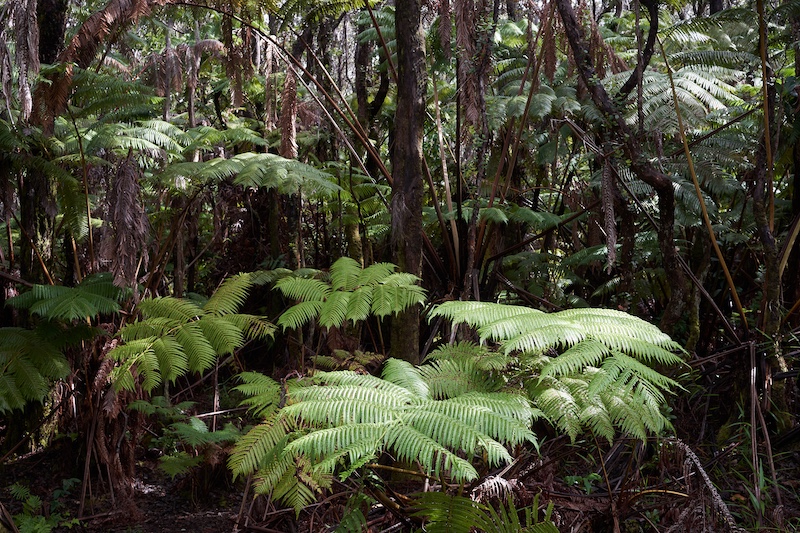
Kilo means observation — how the small observations we begin to have, or we learn to have, lead to a different sense of growth or conscientiousness for our communities in general. In my work, our communities spend a lot of time in discussions about how we observe and experience the environment. One of the learnings is — oh! This is a foreign environment, most of the vegetation today between the shoreline and our mountains are introduced and often invasive — being able to see what is or is not native is important to understanding our context. This leads to change. That might be more important than any kind of social movement.