
IN THEIR OWN WORDS
Cultivating Leadership by Listening
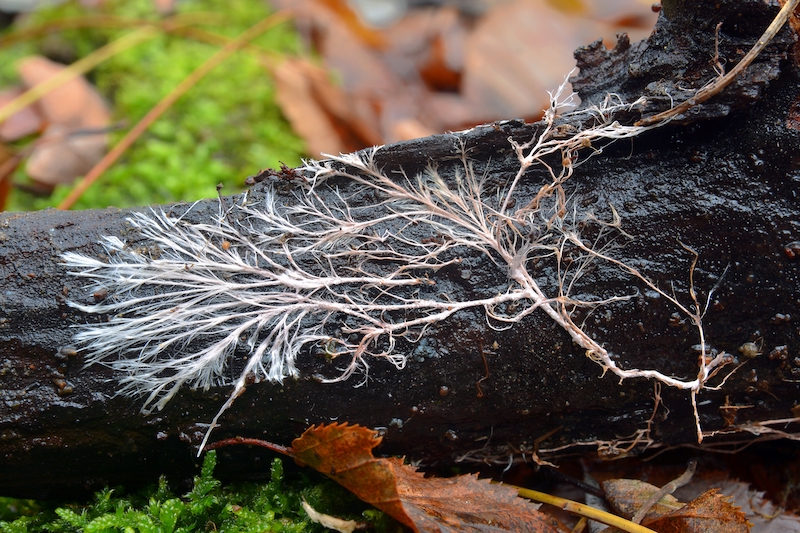
I draw inspiration from the ancient redwood trees of northern California that stand 350 feet tall, but their roots are only 10-13 feet deep! The secret of their stability is that their roots are interconnected; they’re strong because they’re connected. There’s a vast network of support under the surface. Even in the wildest of storms, the roots hold the trees up. We need to strengthen the web that connects us all and cultivate our root systems. This is how we support each other in times of challenge. Every generation has challenges, but in every generation people step forward as champions.
We have the opportunity to step forward as champions. You can spend a lot of energy gatekeeping. Instead, we can choose to join together, listen deeper to each other, and build strong root systems for our communities to flourish.
B. is a youth advocate, community organizer, and system change leader with a passion for cultivating ecosystems of care. B. spent many years in Texas and is committed to building strong root systems for our youth and communities to flourish.
CDE: For this story, B. said they wanted to “…reflect on a story about how love has been a catalyst” for them. We started by asking, “How do you define ‘love?’”
B. quoted bell hooks: “Love is the will to extend one’s self for the purpose of nurturing one’s own or another’s spiritual growth.”
CDE: What’s the story you’d like to tell?
B.: I was lucky to be in a doctoral program that was cohort-based for three years. It was a tight-knit group, with an intensive course, Practicing Leadership Inside and Out, and it was transformational. We were doing the inner work of leadership – the inner work of choosing love every day, and cultivating authentic, trusting relationships, which leads to justice in the wider world.
My masters is in public policy. I was trained to look at systems and policy, but I lacked emotional literacy. Being frank – because of past hurts, it was hard for me to trust. I had been in a lot of toxic work environments and had built up armor. The doctoral program was a huge gift. Before entering the doctoral program, I did intensive work with the Center for Mindful Self-Compassion on fierce self-compassion. The inner work began with an invitation to write a letter to myself about something I wanted to change – first from the voice of the inner critic, and then from the voice of compassionate wisdom. I started listening more to that inner compassionate voice and intentionally leaning into relationships. I learned that we change, love, heal, and grow in relationship, and creating those learning environments helps people grow.
During my doctoral research I spent three years in a school district. With a parent leader, I co-created and co-facilitated a Children’s Cabinet composed of 25 multi-generational, cross-sectoral leaders. The group identified two issues to address as a community: accessing resources and relational aggression/mean behavior. Parents had concerns about what their young people were experiencing at school. We thought carefully about how we wanted to move in this moment and intentionally cultivated leadership by listening.
We held listening sessions at the public library, where we sat in a circle and started with breath work. We asked parents, “How are you arriving in this space?” Practicing deep, open-hearted listening, we asked parents to share their experience. Parents shared authentically and courageously about the challenges they were experiencing. They wanted to know: “What is bullying, and what is kids being kids?” “When do I step in and when do I hang back?”
I shared the results of parent listening sessions with leaders around town. We came up with a strategy to cultivate school and community connectedness. We then held listening sessions with student affinity groups at the high school – including Students of Color and Allies for Equity, Justice, and Inclusion, the Gender and Sexuality Alliance, with captains of sports teams, with Rise Against Cancer (a club started by a student who had lost a parent to cancer), the Politics Club, Girl Rising, DECA student entrepreneurs, and the Student Advisory Council to the School Committee.
We asked young people, “Where do you feel connected? Where do you not feel connected? What gets in the way? What would it look like and feel like to be part of a community of belonging?”
There were trends across groups, but also different experiences within the community. It was an 84% white school. Students of color described the challenges of navigating in a school that is predominantly white and the burden of code switching, which they described as exhausting. Students spoke about “feeling exhausted having to switch up who I am” and that they had to “dim their light in certain spaces” and were not able to be who they are.
Students from the Gender and Sexuality Alliance (GSA) felt that transphobia, homophobia and ableism are less visible and harder to see. They wanted faculty to have more skill in understanding and supporting youth with different identities. One student from the GSA said, “Don’t tell me what I need, ask me what I need.”
Students emphasized the need for listening, compassionate understanding, and the importance of changing our attitudes. They expressed concern about “accommodating” a disability and preferred a mindset of “I see you as another human.” They wanted adults to have a mindset of “I’m trying to understand.”
Across affinity groups, students reported that what was getting in the way was an inability to hear and listen to different viewpoints. They described a fear of losing friends with different viewpoints and perspectives, and wanted to build a culture of empathy and respect.
But they also came up with solutions – students recommended education, group work and hands-on projects in classes to make connections across friend groups. They wanted more community service and real-world experience, building a baseline foundation of empathy and respect for different viewpoints and perspectives – starting at the elementary grades.
As for the staff, one elementary school principal was concerned about edginess and tensions among staff, especially in heightened state. The brain has a negativity bias when we’re stressed – that we tend to over-identify with challenges and overlook aspects of our lives and relationships that bring us joy and energy. We introduced frameworks to embrace asset mapping, strength-based approaches in contrast to a deficit and fixing lens, intentionally shifting to the asset mapping lens. We asked, “How will you incorporate a strength-based lens in practice?” Team members spoke of intentionally cultivating relationships with colleagues, including more strengths in student evaluations, bringing a strength-based lens to parent teacher conferences.
Staff asked for more support and tools on navigating conflict. I worked with school administrators to offer a follow up presentation a few months later: How do you Work through Conflict while Cultivating Relationship? I have deep respect for people in caregiving roles. I was honest and transparent about my own learning journey – I’ve learned the hard way that anger destroys relationships. I offered tools and resources from my doctoral studies and the impact on my own journey – in cultivating inquiry as a leadership practice, learning to listen deeply, and work productively across lines of difference.
Our work to cultivate leadership by listening was powerful – and changed how the school district and the community it serves make decisions that affect youth development and well-being – and how the community listens to young people and to each other.
It was powerful to listen and learn from young people and also prepare adult staff and caregivers to be more receptive. It was deep and meaningful work.
CDE: What does it mean to lead with love?
B.: In a public school context, listening was a way in. Deep, open-hearted listening; creating a loving, open-hearted space. In listening sessions, no one was on their phone; people were engaged. It was set up so people could speak authentically. It was very moving. This practice shifted the norms in the community. It changed how the community listens to young people. When we make a new decision, we listen first to those who are most affected. All of that is “leading with love.”
Another question that guided me was: “How do you organize for learning in systems that are hard-wired for execution?” It was a mindset shift. Fast-paced leaders were in an execution mindset, but sacred space is special. It was transformational to create space for gatherings and professional development days. We’d start with breathwork, community building, and asset based approaches: Breathe in for 3, hold for 3, out for 6. Where are you finding joy? How do you organize for learning and growth? It’s been powerful to see how the school district and community have maintained practices to build community and connection.