IN THEIR OWN WORDS
The Wisdom of Being Watchful
C. is a conservation and education leader who believes our relationships with land and with one another shape the future we are creating together. For more than a decade, C. has worked alongside schools, community organizations, and aspiring naturalists to cultivate experiences rooted in place, curiosity, and connection. Her work centers on creating spaces where people of all backgrounds can feel a sense of belonging in the outdoors and in environmental work. C. is deeply interested in the roles that joy, reciprocity, and community play in nurturing lifelong stewardship and helping people reconnect with both place and purpose.
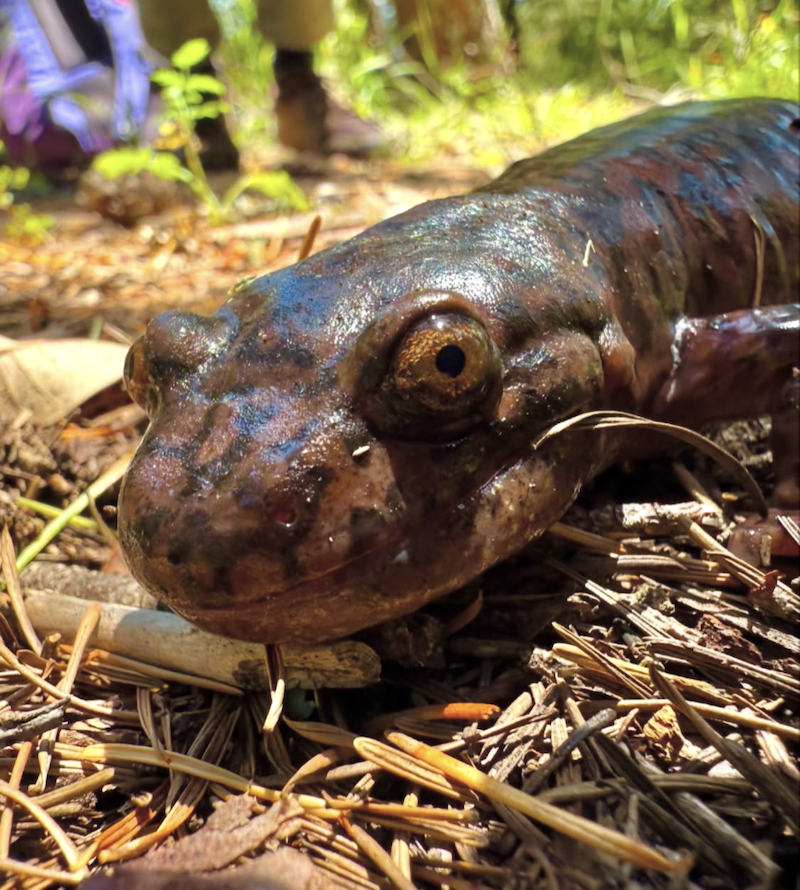
(Pictured above: Giant salamander, photo by C.)
C. shared two pieces of writing with us that speak to the wisdom watchful humans can glean from the natural world.
Jump to the essays below, and read on for more insights from CDE’s conversation with C.
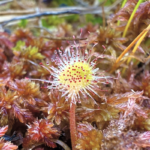
CDE: Thank you for sharing your writing with us. Since not everyone is a bog-exploring naturalist, we begin by asking: Can you please describe a carnivorous sundew?
C.: To understand the sundew you have to understand what a bog is. It’s a type of wetland that’s fed by rain instead of being connected to a river or other water body. Rainwater doesn’t have a lot of nutrients, and a bog holds water, so the water becomes acidic and things don’t break down. Bogs grow a special plant called sphagnum moss, but there aren’t a lot of plants that can live in nutrient-low, acidic, no oxygen water. It’s an intense landscape to survive in. Certain plants build relationships with fungi to survive, and some grow very slowly.
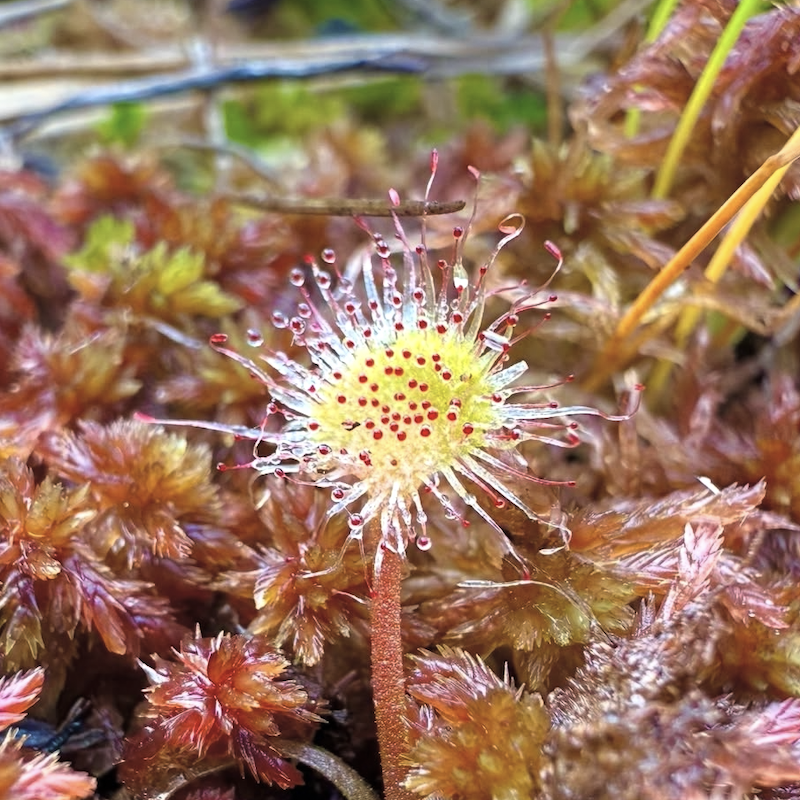
Sundew has the magic of thinking outside the box of a traditional plant lifestyle. It’s very tiny with simple leaf fronds. On the fronds there are tons of hairs, and the tip of each hair has a digestive enzyme that looks like a drop of dew. The sundew’s nutrient base comes from eating insects and breaking them down using the dew. Its nitrogen and other nutrients come from insects. It’s carnivorous because it digests and consumes creatures as opposed to photosynthesizing.
CDE: Why do you think this particular plant speaks to you?
C.: I’m really fascinated by examples in nature that defy our scientific categories. We love to put things in boxes and give labels – simplify models to help us understand. The sundew is a great example of the wild magic of nature that defies traditional standards. It still has plant cells but it’s acquiring nutrients in a different way.
CDE: You write, “A carnivorous plant trusts that what it needs will come in time. I see a lesson there.” Are there other lessons you’ve learned from the land or non-human species?
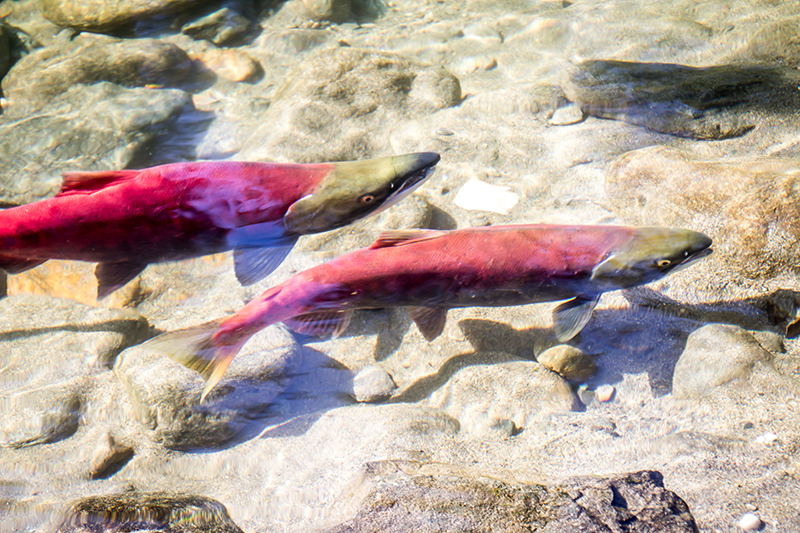
C.: I think every time I encounter an animal or plant it’s like building a relationship and getting to know it intimately. That’s part of the joy of being in relationship, and my journey as a naturalist has come from the pattern of being in relationship. My first dive into conservation was through salmon ecology – I could talk about salmon for hours! I think salmon are the ultimate ambassadors of reciprocity. They spend their entire lives fattening up to lay their eggs, and then sacrifice their bodies to support a forest that their kids will never know. Generations before the true impact of those nutrients circle back, they give in that trust of the future.
What is it like to be in reciprocity with lands I’d like to see, and be in relationship with, for generations? I could go down a rabbit hole on beavers! Beavers are one of those creatures humans have had a fraught relationship with. They were extirpated from California to the point at which scientists were debating whether they were even originally here. There’s more understanding about them now as ecosystem engineers – their habitat sinks and spreads water in ways we so desperately need. They’re important fire breakers. The impact they’ve had on our watershed is hard to measure.
When reintroduced with a mate, within a couple of years beavers are able to return a lot of that ecosystem function. There’s such hope in restoring right relationships with these creatures; it gives me hope that in this crisis of an apocalyptic time there are things that could work and make drastic changes that we might be underestimating right now. The beaver is a good reminder of the work we can still do.
CDE: You write, “I dreamed of what flocks of resilience we could create.” What does abundance mentality and resilience-flocking look like for humans?
C.: When I started my career in conservation and nonprofits, the approach was a competitive mindset, a scarcity mindset. There was only room for one group doing a certain thing. Sometimes environmentalists can be our own worst enemy. More recently in my current role, I’ve been thinking about what it looks like to live with an abundance mindset. What does it look like to build community with an abundance mindset? Last year we had a naturalist class that was made up of an incredibly diverse group of people – all different roles in conservation – at a time of insane budget cuts. Many people in the class were being laid off. It was a stressful, hard time. In that class, finding such heart and care and community created a feeling of resilience. Why was that so special? This should be how everyone feels in all their communities! Why is this so unique in people’s lives? What do we need in this really challenging time?
Feeling resilience in this work that can feel filled with anxiety, defeat, overwhelm, burnout – what does it look like to do the hard work of resisting that? The theme of joy comes up a lot. There was recently research published out of the University of Washington that showed that joy is a greater factor in determining an impact of a program’s ability to shape stewardship identity. Actually, the amount of authentic joy felt was a better determining factor of long-term stewardship identity than actual scientific facts. What would it look like to be evaluating based on joy?
ESSAYS BY C.
Lessons from the Sundew
I remember the day I fell in love with a bog. We slipped into waders searching for the elusive carnivorous sundew. After our professor shared a story about stepping on a ground wasp nest, most of my classmates lingered near the trail’s edge. I, on the other hand, was waist-deep in the heart of the bog, fully immersed in sphagnum moss. We never did find a sundew that day, but the bog stole my heart.
I’ve felt called back to the bog since, like a whisper to return to an old teacher.
Sphagnum moss, which thrives in bogs, has an amazing ability to hold water in its cells whether it’s dead or living. Its very structure resists decay. Over centuries, the accumulation becomes peatland, a vast living archive of carbon, capable of holding more carbon than any neighboring forests.
I feel a kinship with the bog’s quiet rebellion.
A bog is known for its scarcity, specifically in nutrients. It is poor in nitrogen, poor in oxygen, and yet, out of that scarcity, life emerges in the most exquisite form.
The round-leaf sundew invites insects to land on its glistening, sugary drops. What looks like dew is in fact a trap, a very clever invitation. Once caught, the insect dissolves slowly, its body offered as nourishment.
A carnivorous plant trusts that what it needs will come in time. I see a lesson there. Sometimes, patience is the most radical form of ambition. The sundew reminds me that thriving is about adaptation, meeting the world as it is, and finding the beauty there.
I’ve often felt like an outlier myself, holding big dreams, visions that can feel strange to others. But maybe, like the sundew, that strangeness is simply another kind of wisdom. When we challenge the status quo, we create space for wild possibilities. The sundew proves that thriving doesn’t require abundance, just creativity, patience, and the courage to bloom in unlikely places.
Mixed Feeding Flock
As I hung up the phone to yet another friend in the hospital; I heard a loud growing celebration of birds outside my window.
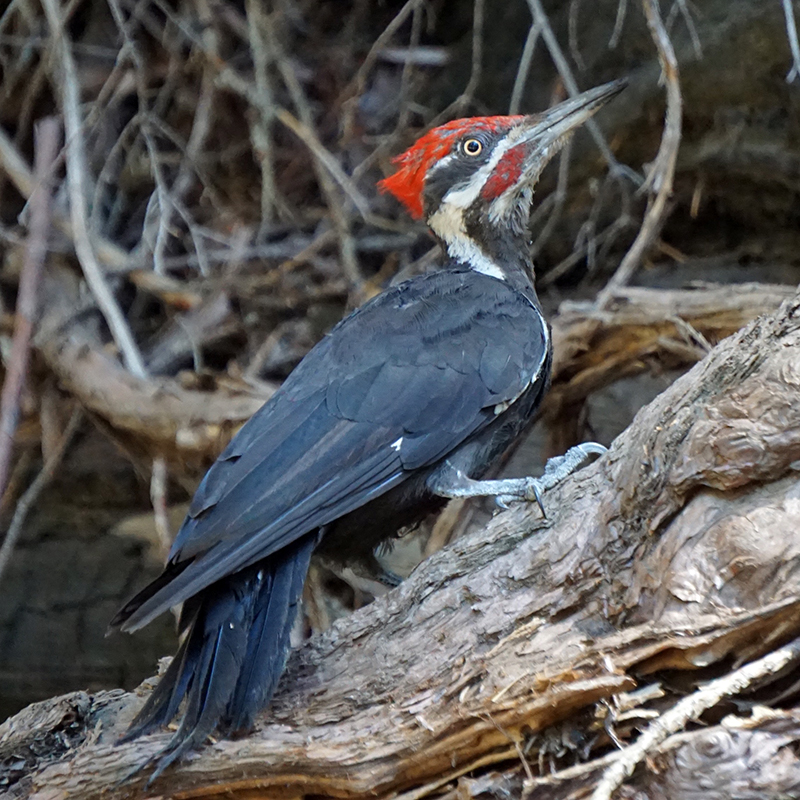
In the winter we get flocks of a mixed species of birds feeding, gleaning on trees and calling back and forth to track their family members. Typically I notice groups of 30 to 40 different individuals making up a handful of species. On this specific day hundreds of birds played above my yard: the memorable call of the varied thrush in winter; male robins with loudly competing songs; a chestnut back chickadee serving as alarm, living up to its duty as the strict watch for predators.
It was 1:00 in the afternoon and the cacophony was louder than any dawn chorus I have heard.
The flicker found an ant mound on the grassy lawn, and a pair of hairy woodpeckers peeled bark from dead branches. A spotted towhee shyly watched me.
This collective, supporting one another, gave me a model of community resilience I needed in that moment. For birds that don’t migrate in the winter, working together is an essential strategy for survival.
This is a time of the year where there are no breeding hormones pushing for competition and division. They lead with an abundance mindset, loudly calling to notify the neighborhood of the abundance of food they’ve found. Everyone benefits from the collective support, the community.
This group has felt like my winter feeding flock. Despite the long winter days and the changing climate, birds of all species band together to ensure mutual benefit – sharing abundance and serving a role as fierce protectors of one another, communicating consistent notes of safety.
What would it look like if we created and tended our own mixed feeding flock? What would your role be? Or mine? As the hairy woodpecker kept a steady heartbeat behind the symphony of song, I dreamed of what flocks of resilience we could create.